
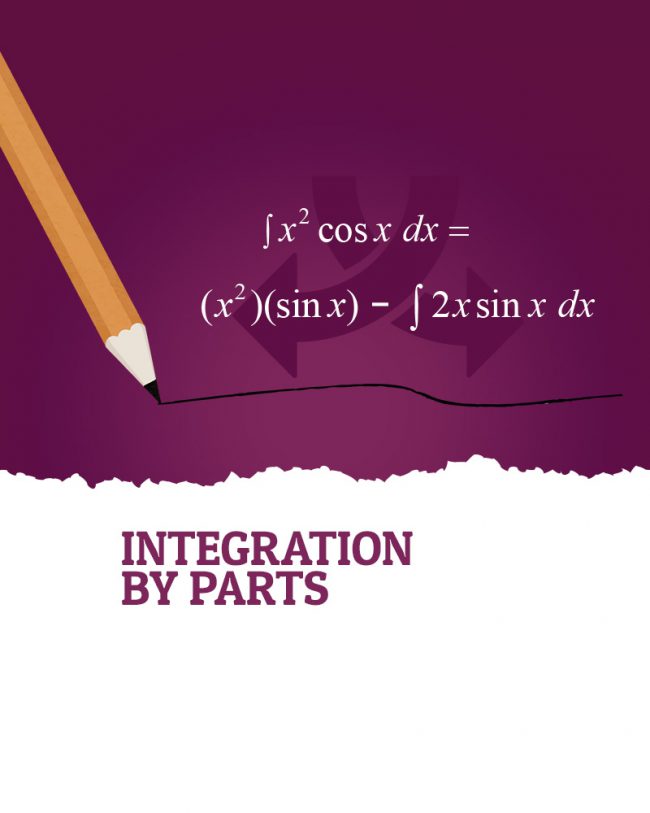
Integration By Parts

[tlg_steps style=”steps-style-2″][tlg_steps_content step_link=”url:http%3A%2F%2F127.0.0.1%2Fmkmath%2Fcalculus%2F” title=”Calculus” icon=”ti-arrow-circle-right” subtitle=”Topics”][tlg_steps_content step_link=”url:http%3A%2F%2F127.0.0.1%2Fmkmath%2Fcalculus%2Fintegration%2F|title:Introductory%20Calculus” title=”Integration” icon=”ti-arrow-circle-right” subtitle=”Topics”][/tlg_steps] In this example, there is a product of x^2 and cosx dx in the integrand. Does simple u-substitution method work for this example? In order to use the simple u-substitution method, the relationship between two functions must be the original and its derivative each other…
Optimization

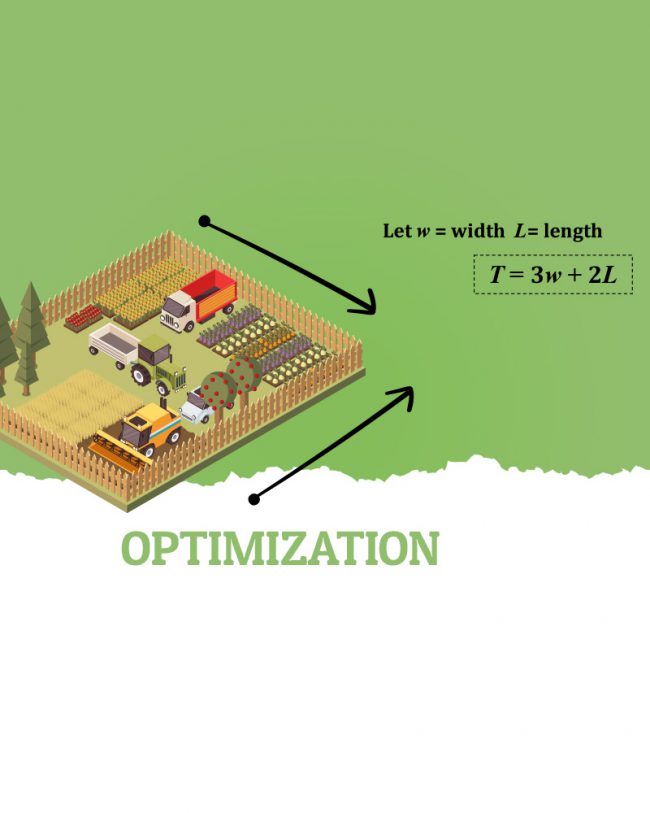
[tlg_steps style=”steps-style-2″][tlg_steps_content step_link=”url:http%3A%2F%2F127.0.0.1%2Fmkmath%2Fcalculus%2F” title=”Calculus” icon=”ti-arrow-circle-right” subtitle=”Topics”][tlg_steps_content step_link=”url:http%3A%2F%2F127.0.0.1%2Fmkmath%2Fcalculus%2Fdifferentiations%2F|title:Introductory%20Calculus” title=”Differentiation” icon=”ti-arrow-circle-right” subtitle=”Topics”][/tlg_steps] Draw a picture of the scenario, if you can. Step(1) Formulate the objective function. Step(2) Reduce the objective function to One variable. Step(3) Take the derivative of the function and find the critical value(s). Step(4) Find the local max or min by either First derivative…