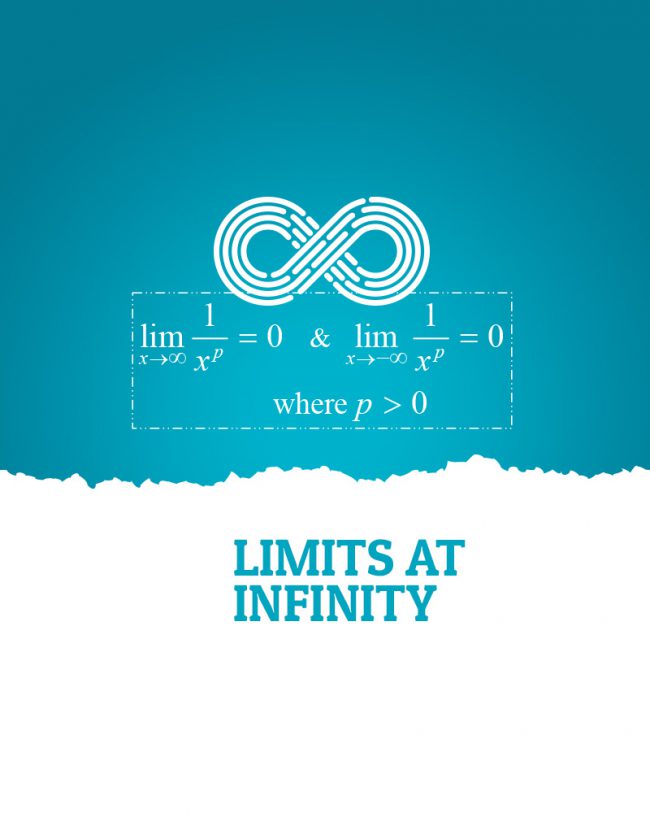
Limits At Infinity

[tlg_steps style=”steps-style-2″][tlg_steps_content step_link=”url:http%3A%2F%2F127.0.0.1%2Fmkmath%2Fcalculus%2F” title=”Calculus” icon=”ti-arrow-circle-right” subtitle=”Topics”][tlg_steps_content step_link=”url:http%3A%2F%2F127.0.0.1%2Fmkmath%2Fcalculus%2Fintro%2F|title:Introductory%20Calculus” title=”Introductory” icon=”ti-arrow-circle-right” subtitle=”Topics”][/tlg_steps] To evaluate the limit as x approaches infinity, take the largest exponent term each from the numerator and denominator, simplify the fraction, and then apply the limit rules as shown. More in this Section [tlg_blog layout=”carouseldetail” pppage=”-1″ pagination=”yes” overlay=”no-overlay” filter=”455″]
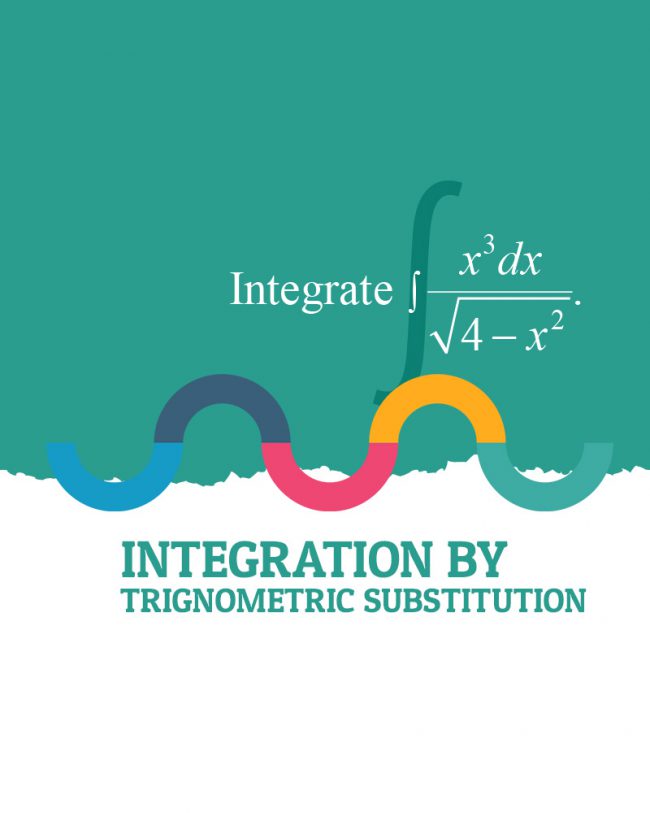
Integrating by Trigonometric Substitution

[tlg_steps style=”steps-style-2″][tlg_steps_content step_link=”url:http%3A%2F%2F127.0.0.1%2Fmkmath%2Fcalculus%2F” title=”Calculus” icon=”ti-arrow-circle-right” subtitle=”Topics”][tlg_steps_content step_link=”url:http%3A%2F%2F127.0.0.1%2Fmkmath%2Fcalculus%2Fintegration%2F|title:Introductory%20Calculus” title=”Integration” icon=”ti-arrow-circle-right” subtitle=”Topics”][/tlg_steps] This method allows us to change algebraic functions into trigonometric functions, integrate them in trigonometric forms, and return to the original algebraic functions as solutions. More in this Section [tlg_blog layout=”carouseldetail” pppage=”-1″ pagination=”yes” overlay=”no-overlay” filter=”452″]

Solving Differential Equation by Laplace Transforms

[tlg_steps style=”steps-style-2″][tlg_steps_content step_link=”url:http%3A%2F%2F127.0.0.1%2Fmkmath%2Fcalculus%2F” title=”Calculus” icon=”ti-arrow-circle-right” subtitle=”Topics”][tlg_steps_content step_link=”url:http%3A%2F%2F127.0.0.1%2Fmkmath%2Fcalculus%2Fintro%2F|title:Introductory%20Calculus” title=”General” icon=”ti-arrow-circle-right” subtitle=”Topics”][/tlg_steps] Before starting the example, you need to know the following steps to solve DE by Laplace transforms. Step 1. Take the Laplace transforms of both sides of the equation. Step 2. Solve for the Laplace of Y. Step 3. Manipulate the Laplace transform, F(s) until…

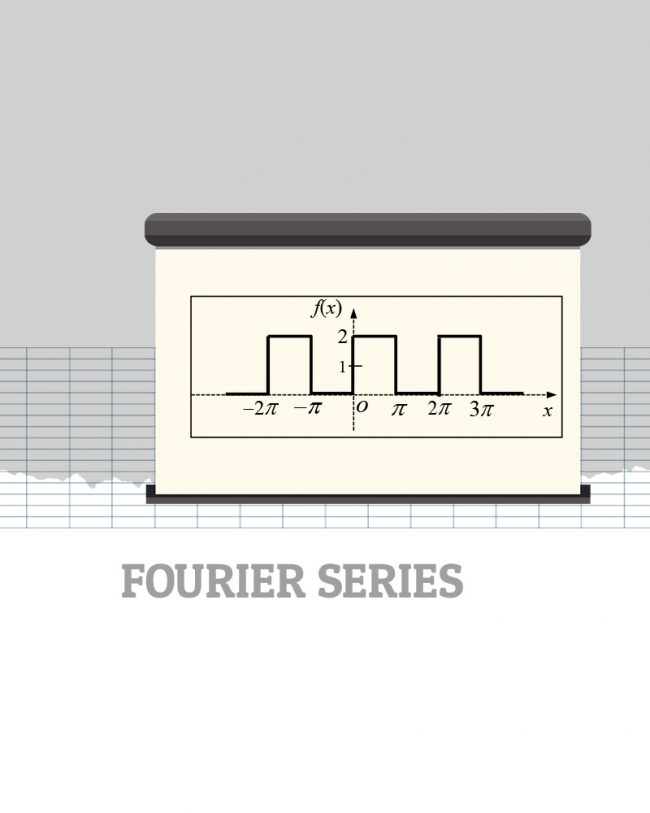
Fourier Series

[tlg_steps style=”steps-style-2″][tlg_steps_content step_link=”url:http%3A%2F%2F127.0.0.1%2Fmkmath%2Fcalculus%2F” title=”Calculus” icon=”ti-arrow-circle-right” subtitle=”Topics”][tlg_steps_content step_link=”url:http%3A%2F%2F127.0.0.1%2Fmkmath%2Fcalculus%2Fintro%2F|title:Introductory%20Calculus” title=”General” icon=”ti-arrow-circle-right” subtitle=”Topics”][/tlg_steps] Before looking at the example, you need to know the formula of Fourier Series as shown. If you know the additional information shown, you could reduce your work. (1) Odd functions have Fourier Series with only sine terms, which means you only find the coefficients,…

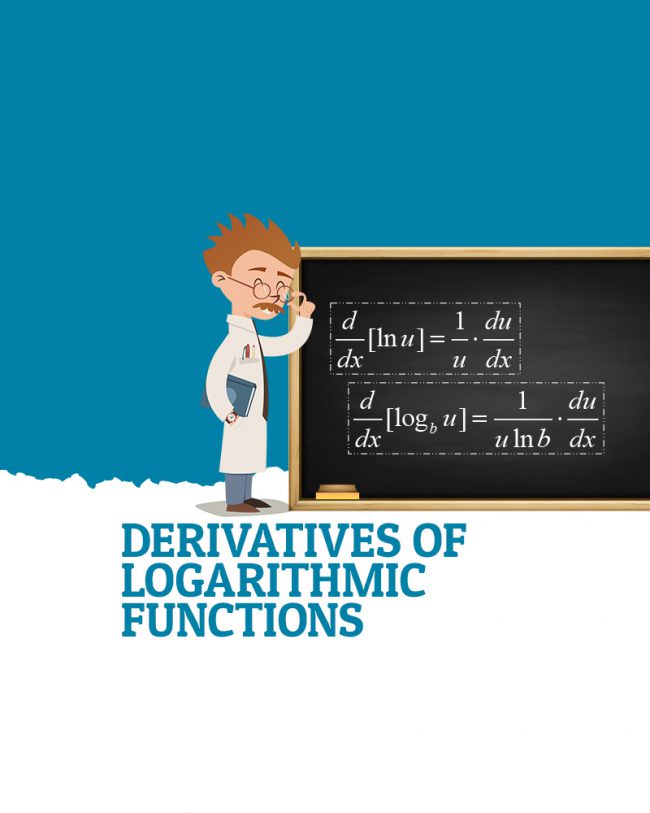
Derivatives of Logarithmic Functions

[tlg_steps style=”steps-style-2″][tlg_steps_content step_link=”url:http%3A%2F%2F127.0.0.1%2Fmkmath%2Fcalculus%2F” title=”Calculus” icon=”ti-arrow-circle-right” subtitle=”Topics”][tlg_steps_content step_link=”url:http%3A%2F%2F127.0.0.1%2Fmkmath%2Fcalculus%2Fdifferentiations%2F|title:Introductory%20Calculus” title=”Differentiation” icon=”ti-arrow-circle-right” subtitle=”Topics”][/tlg_steps] Before starting examples, you need to know the derivative formulas as shown. In many cases, we need to make use of the properties of logarithm as well. Please remember that if you see “ln” symbol, it is called natural log and it has the base…

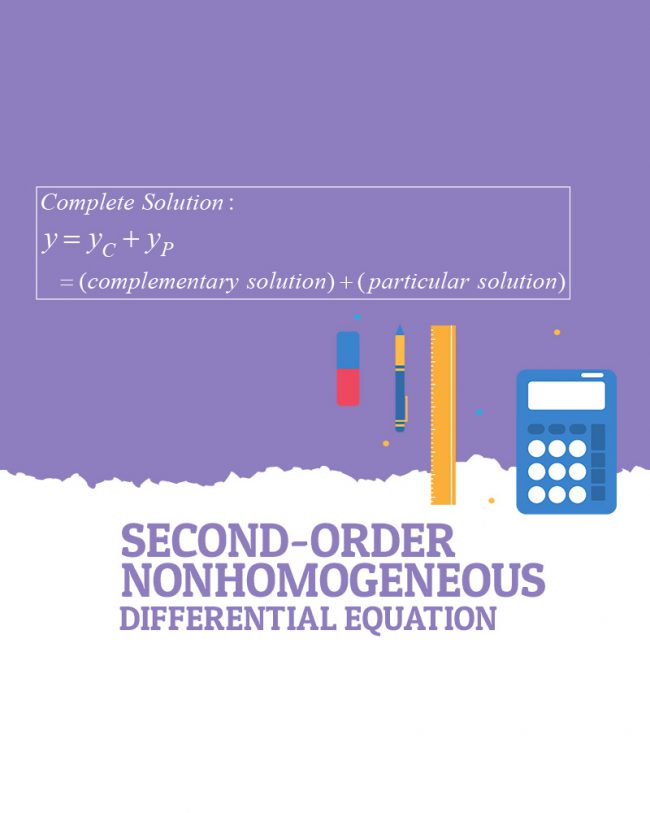
2nd order Nonhomogeneous Differential Equation

[tlg_steps style=”steps-style-2″][tlg_steps_content step_link=”url:http%3A%2F%2F127.0.0.1%2Fmkmath%2Fcalculus%2F” title=”Calculus” icon=”ti-arrow-circle-right” subtitle=”Topics”][tlg_steps_content step_link=”url:http%3A%2F%2F127.0.0.1%2Fmkmath%2Fcalculus%2Fintro%2F|title:Introductory%20Calculus” title=”General” icon=”ti-arrow-circle-right” subtitle=”Topics”][/tlg_steps] Before looking at the example, you need to know the solution formula for second-order differential equations ay”+ by’ +cy = f(x) as shown. Notice that there are two parts, y-sub C and y-sub P in the complete solution. One part, y-sub C is solving a…

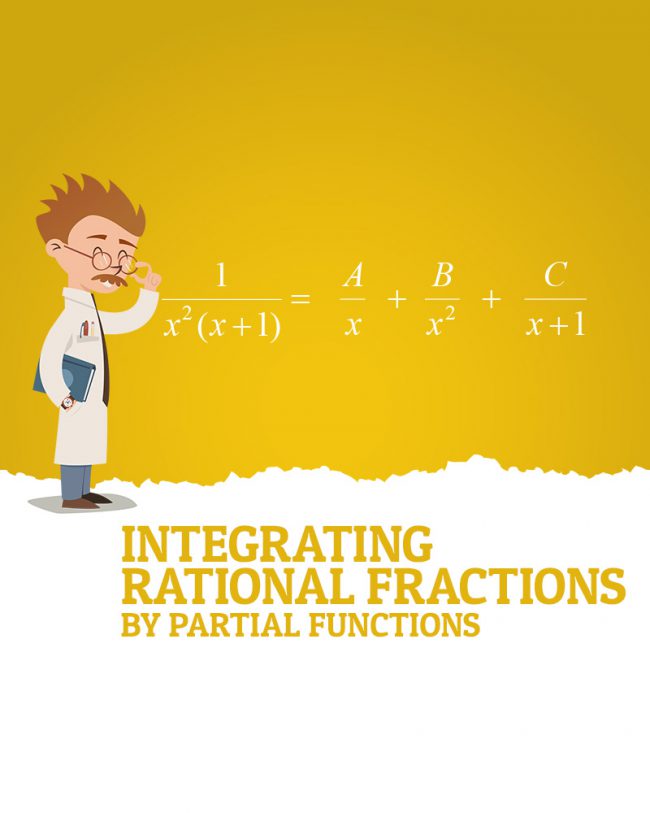
Integrating Rational Fractions by Partial Fractions

[tlg_steps style=”steps-style-2″][tlg_steps_content step_link=”url:http%3A%2F%2F127.0.0.1%2Fmkmath%2Fcalculus%2F” title=”Calculus” icon=”ti-arrow-circle-right” subtitle=”Topics”][tlg_steps_content step_link=”url:http%3A%2F%2F127.0.0.1%2Fmkmath%2Fcalculus%2Fintegration%2F|title:Introductory%20Calculus” title=”Integration” icon=”ti-arrow-circle-right” subtitle=”Topics”][/tlg_steps] If you take a look at the integrand of the question, it seems a relatively complicated fraction. If we can split it into simpler fractions, then we may be able to integrate them easily. Making use of partial fractions to get the simpler fractions. First,…

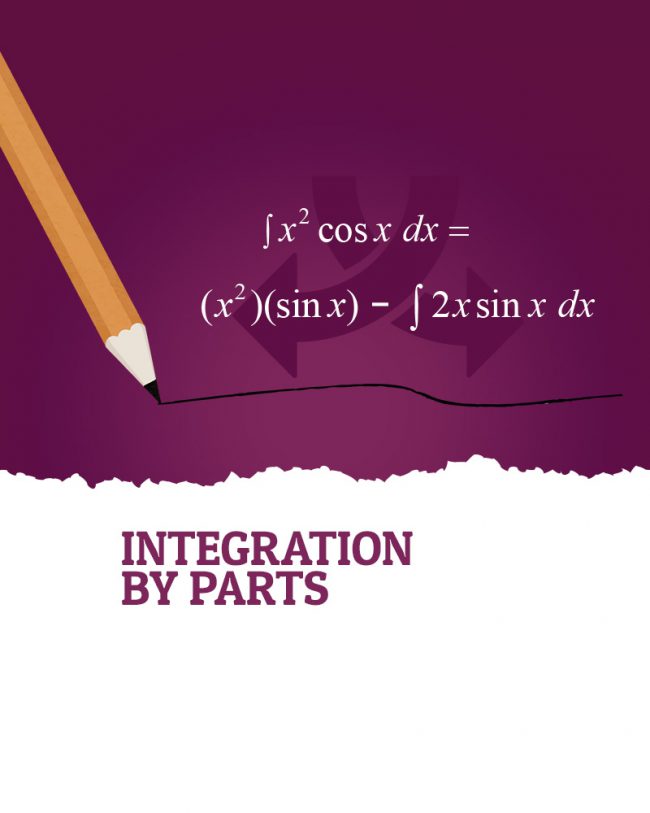
Integration By Parts

[tlg_steps style=”steps-style-2″][tlg_steps_content step_link=”url:http%3A%2F%2F127.0.0.1%2Fmkmath%2Fcalculus%2F” title=”Calculus” icon=”ti-arrow-circle-right” subtitle=”Topics”][tlg_steps_content step_link=”url:http%3A%2F%2F127.0.0.1%2Fmkmath%2Fcalculus%2Fintegration%2F|title:Introductory%20Calculus” title=”Integration” icon=”ti-arrow-circle-right” subtitle=”Topics”][/tlg_steps] In this example, there is a product of x^2 and cosx dx in the integrand. Does simple u-substitution method work for this example? In order to use the simple u-substitution method, the relationship between two functions must be the original and its derivative each other…

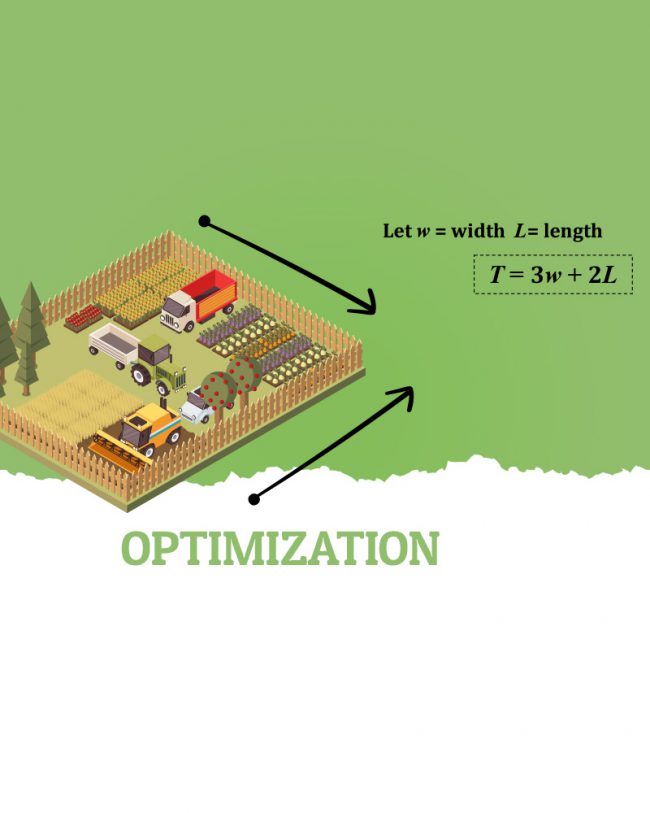
Optimization

[tlg_steps style=”steps-style-2″][tlg_steps_content step_link=”url:http%3A%2F%2F127.0.0.1%2Fmkmath%2Fcalculus%2F” title=”Calculus” icon=”ti-arrow-circle-right” subtitle=”Topics”][tlg_steps_content step_link=”url:http%3A%2F%2F127.0.0.1%2Fmkmath%2Fcalculus%2Fdifferentiations%2F|title:Introductory%20Calculus” title=”Differentiation” icon=”ti-arrow-circle-right” subtitle=”Topics”][/tlg_steps] Draw a picture of the scenario, if you can. Step(1) Formulate the objective function. Step(2) Reduce the objective function to One variable. Step(3) Take the derivative of the function and find the critical value(s). Step(4) Find the local max or min by either First derivative…